
Many buyers worry about whether stick pack machines can produce the right stick pack sizes for their products. The wrong dimension means wasted material and higher costs.
Stick pack machines can produce a wide range of stick pack sizes, typically between 17mm to 50mm in width and 45mm to 200mm in length, depending on the product and machine design.
I have seen many clients get confused when they compare machine specifications. The truth is, stick pack sizes are not fixed. They depend on machine models, film rolls, and product flow. Let me walk you through the details.
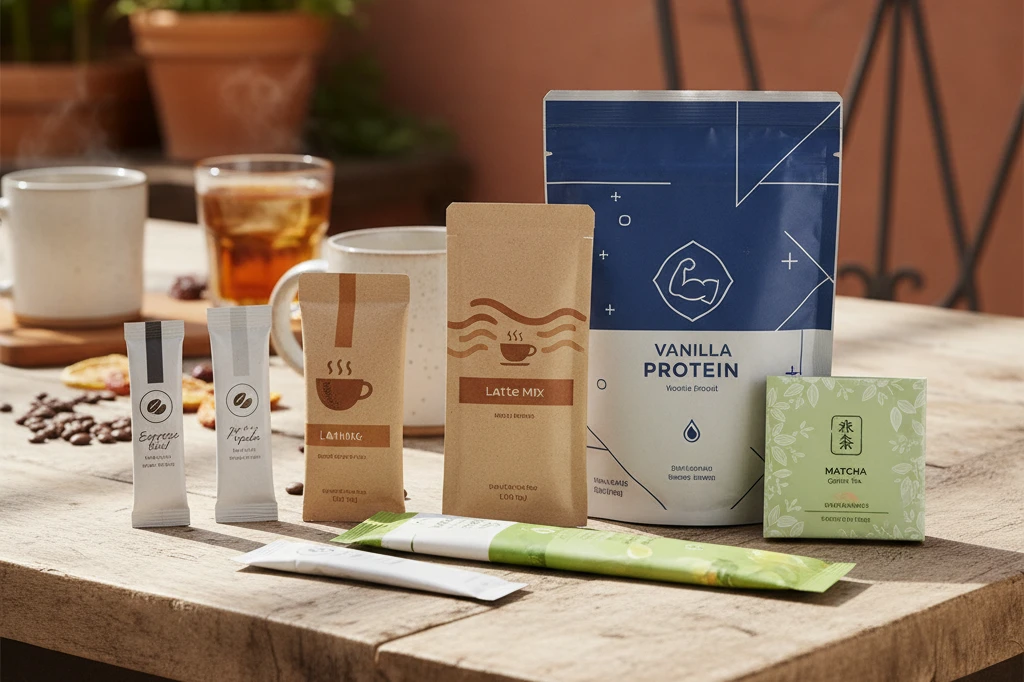
What is the standard width of stick packs?
Many people worry that their stick pack sizes might look too thin or too wide. This is a common concern for food, pharma, and supplements.
The standard stick pack width usually ranges from 17mm to 50mm, depending on filling needs and product type.
Breaking down width options
When I first started working with stick pack machines[1], I realized most customers think only about “capacity.” But width is a key factor in marketing appeal. Slim stick pack sizes[2] are often chosen for energy powders, coffee, or electrolytes, while wider packs are used for thicker powders or granules.
Here is a clear table showing different width categories:
| Stick Pack Width | Common Usage | Example Products |
|---|---|---|
| 17mm – 20mm | Slim sticks | Instant coffee, vitamins |
| 21mm – 30mm | Medium width | Protein powders, electrolytes |
| 31mm – 50mm | Wide sticks | Sugar, granular medicines |
I noticed buyers often prefer the middle range (around 25mm), as it balances material efficiency[3] and branding. But the final decision always depends on what the product needs.
What is the typical length of stick packs?
Some products require longer stick pack sizes to hold larger volumes. Others need shorter ones to stay compact. This is why length is critical.
Stick pack length usually ranges from 45mm to 200mm, depending on machine design and film roll capacity.
Why length matters
Length is not just about how much product fits inside. It also influences how customers perceive convenience. For example, shorter stick pack sizes are easier to carry in wallets or small bags. Longer sticks give the impression of more value.
| Stick Pack Length | Common Usage | Example Products |
|---|---|---|
| 45mm – 80mm | Very compact | Single-dose supplements |
| 81mm – 130mm | Standard size | Instant drinks |
| 131mm – 200mm | Large size | Meal replacements |
I once worked with a client who insisted on the longest possible stick pack sizes[2], but later they realized smaller ones sold better. It taught me that bigger is not always better.
How does volume affect stick pack sizes?
Some buyers only think in terms of milliliters or grams. They ask, “How many grams can it hold?” The truth is, stick pack sizes and volume are linked.
Stick packs can hold between 1g to 50g of product, depending on both width and length.
The volume connection
When we calculate stick pack sizes, we need to consider both powder flow and filling density. A bulky powder like collagen will require a wider stick than a dense powder like sugar. Machines from Hannpro allow flexibility, so one line can often adjust to several volume ranges.
| Volume Capacity | Stick Pack Size | Product Examples |
|---|---|---|
| 1g – 5g | Small, slim | Sweeteners, supplements |
| 6g – 15g | Medium size | Energy powders, drink mixes |
| 16g – 50g | Large size | Meal replacements, protein |
I always tell clients to send product samples first. This way, we can test the density and adjust the forming tube for the best stick pack sizes[2].
Are custom stick pack sizes possible?
Buyers sometimes worry that machines only make “fixed sizes.” That is not true. Most modern stick pack machines can be customized.
Yes, machines can be adjusted to produce custom stick pack sizes if the forming tube and cutting system are designed accordingly.
Customization explained
When I worked on a project for a supplement company, they asked for a special 22mm x 110mm stick. It was not standard, but with small tooling changes, we delivered it. This flexibility is one reason why stick pack sizes are so popular.
| Custom Feature | What Can Be Changed | Notes |
|---|---|---|
| Width | Forming tube size | Needs correct film roll width |
| Length | Cutting position | Adjustable through machine settings |
| Shape | Round/flat edges | Custom sealing jaws required |
This is why I always advise clients: don’t limit your imagination to the catalog. With the right machine, we can create stick pack sizes that fit your branding.
Do machines limit the number of lanes?
Another question I often hear is about productivity. Some clients think lane count[4] affects stick pack sizes[2].
Lane number affects output speed, but each lane can be set to the same or different stick pack sizes.
The role of lanes
In multi-lane stick pack machines, each lane produces one stick at a time. If you have 5 lanes, you get 5 sticks per cycle. However, all lanes are normally set to the same stick pack sizes for efficiency.
| Lane Count | Production Capacity | Notes |
|---|---|---|
| 1 – 3 lanes | Small output | Good for startups |
| 4 – 8 lanes | Medium output | Standard production |
| 9+ lanes | High output | For mass manufacturers |
At Hannpro, I’ve seen clients upgrade from 3 lanes to 6 lanes after demand grew. That decision doubled their output without changing the stick pack sizes.
Can stick pack sizes be too small or too large?
Some customers push for extreme sizes, but machines do have limits.
Yes, there are practical limits. Very small stick pack sizes may not seal well, and very large ones may waste film.
Understanding the limits
If a stick is too small, the machine cannot seal edges correctly, leading to leaks. If it is too large, the material stretches and wastes packaging. The sweet spot is usually between 20mm x 80mm and 30mm x 150mm.
| Dimension Type | Problem | Solution |
|---|---|---|
| Too small | Seal issues | Use minimum 17mm width |
| Too long | Film misalignment | Keep under 200mm |
| Too wide | Branding limits | Stay under 50mm |
When I first experimented with micro stick pack sizes, I realized the material loss was higher than expected. It taught me that “possible” is not always “practical.”
Conclusion
Stick pack sizes are flexible, usually between 17–50mm in width and 45–200mm in length. The right size depends on product, density, and branding.
[1]: Learn about the technology behind stick pack machines and how they can be customized for different products.
[2]: Explore this link to understand the various stick pack sizes and their applications in different industries.
[3]: Explore the concept of material efficiency in stick pack production and its importance.
[4]: Learn how lane count impacts production speed and efficiency in stick pack machines.