
Sachet packaging is everywhere—from ketchup packets to shampoo samples—and it might be the most underestimated innovation in packaging today.
Sachet packaging is a form of small, sealed flexible packaging used for single-use doses of products like liquids, powders, or gels. It’s lightweight, cost-effective, and easy to distribute.
For manufacturers and traders looking to expand their product reach, sachet packaging opens up a world of possibilities. Let’s take a closer look at why this packaging style is so powerful.

Why is sachet packaging gaining popularity?
Sachet packaging isn’t just cheap—it’s smart. It solves multiple problems for brands, retailers, and consumers in one compact design.
Sachet packaging is becoming more popular because it offers affordable, single-use doses that help brands reach price-sensitive markets while reducing waste and improving convenience.
It solves the affordability problem
Many customers in emerging markets can’t afford large product sizes. Sachets let them access quality goods without breaking the bank. This isn’t just good for the buyer—it’s a win for companies trying to enter new markets.
| Feature | Benefit |
|---|---|
| Small quantity | Affordable price for customers |
| Portable size | Easy to carry and store |
| Controlled dosage | Minimizes waste and overuse |
| Eye-catching design | Easy to brand and attract attention |
By offering small, affordable units, sachet packaging builds trust and brand loyalty over time. It’s a strategy I’ve seen work wonders, especially in competitive or price-sensitive markets.
How does sachet packaging work?
Sachet packaging might look simple, but the process behind it is full of precision and technology.
Sachet packaging machines fill and seal small pouches of product, using heat and pressure to ensure the package is airtight and ready for transport.
The production process is more complex than it seems
Sachet packaging machines, like the ones we make at Hannpro, are designed to fill, seal, and cut hundreds of sachets per minute. This requires careful coordination between temperature, speed, and material strength.
| Step | Description |
|---|---|
| Filling | Liquid, powder, or paste is measured out |
| Sealing | Heat seals the film, enclosing the product |
| Cutting | Sachets are separated into individual units |
| Batch coding | Lot numbers and expiry dates are printed |
Understanding how these machines work helps buyers pick the right one. That’s where I often come in—I explain the options based on product type and output needs.
What are the main types of sachet packaging?
Not all sachets are made the same. Each design serves a specific need or product type.
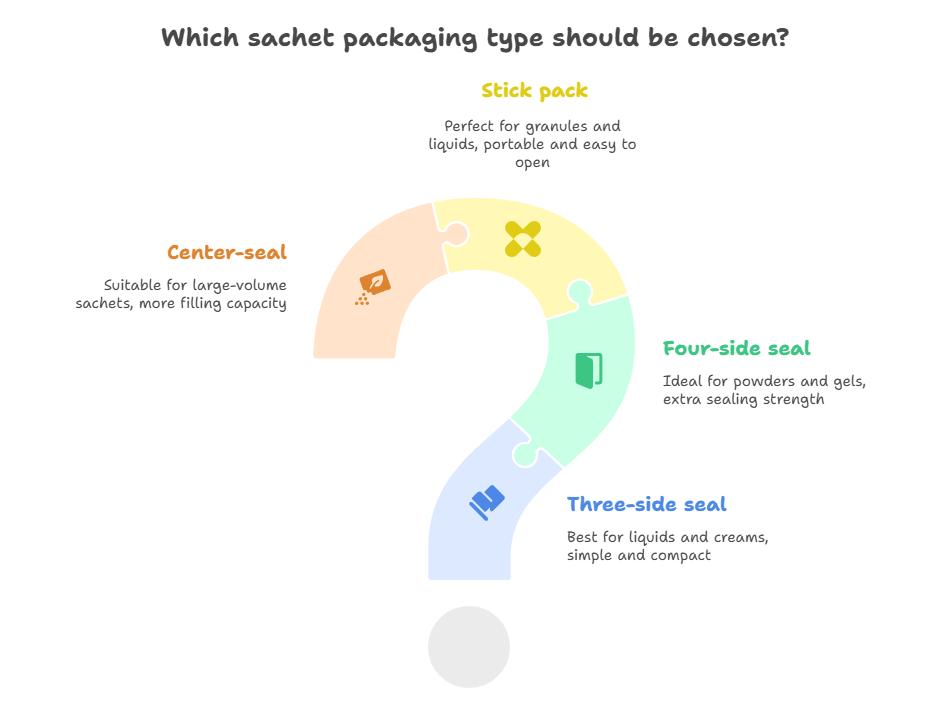
The main types of sachet packaging include three-side seal, four-side seal, center-seal, and stick packs, each offering different shapes and usability.
Different styles meet different goals
Three-side and four-side seals are great for precise dosing and a professional look. Stick packs are perfect for granules and are super easy to open and pour.
| Sachet Type | Best For | Pros |
|---|---|---|
| Three-side seal | Liquids and creams | Simple, compact, easy to produce |
| Four-side seal | Powders and gels | Extra sealing strength |
| Stick pack | Granules and liquids | Portable and space-saving |
| Center-seal | Large-volume sachets | More filling capacity |
Each format can be customized with easy-tear notches, spouts, or special coatings. I always advise clients to choose based on product texture, target market, and branding goals.
Why should manufacturers invest in sachet packaging?
It’s not just about the packaging—it’s about building a smarter, more scalable business.
Manufacturers should invest in sachet packaging to reduce costs, improve efficiency, and reach new customers in cost-sensitive markets.
The returns are worth the setup
Investing in sachet machinery may seem expensive at first, but the long-term benefits make it worthwhile. Lower packaging costs, higher output, and expanded market access quickly balance the investment.
| Investment Area | Benefit |
|---|---|
| Packaging machine | Fast, repeatable, consistent results |
| Material sourcing | Bulk film reduces long-term costs |
| Custom molds/tools | Tailored to your product and market |
We at Hannpro have seen how the right sachet solution transforms small factories into regional leaders. Many of our customers start small, then scale quickly after launching sachets.
What makes sachet packaging machines essential for modern manufacturing?
No sachet product is possible without a good machine. And in a competitive industry, not all machines are equal.
Sachet packaging machines are essential because they automate production, increase speed and accuracy, and allow brands to scale with minimal labor.
How to choose the right sachet packaging machine
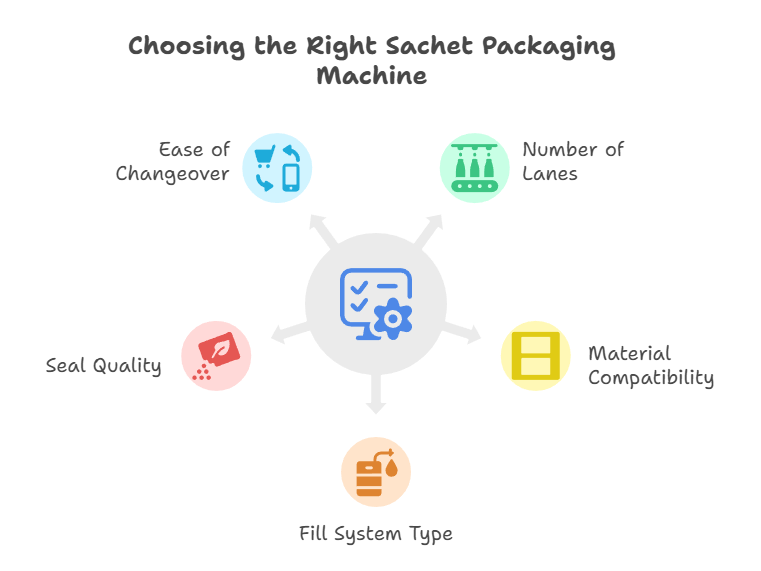
Picking the right machine depends on the product type, viscosity, fill volume, and daily output target. Here’s what I always tell new clients to look at:
| Machine Feature | Why It Matters |
|---|---|
| Number of lanes | More lanes = higher output |
| Material compatibility | Must match film used for your sachets |
| Fill system type | Pump, auger, or gravity based on product |
| Seal quality | Must be leak-proof and shelf-stable |
| Ease of changeover | Saves time when switching products |
I always work closely with clients to define their production goals. Some need to pack free-flowing liquids like soy sauce. Others deal with sticky pastes or delicate powders. The fill system must match the job. That’s why we offer piston pumps, gear pumps, and auger fillers.
Common problems solved by good machines
Poor sealing, inaccurate fills, or film tearing can ruin a batch. A well-built machine fixes this. One of my recent clients struggled with broken seals until they upgraded to a servo-driven heat seal system. Their defect rate dropped from 9% to less than 0.5%.
So yes, sachet packaging machines are a serious investment. But when you get the right one, it pays for itself in less than a year.
What industries benefit the most from sachet packaging?
You might be surprised—sachets aren’t just for food and cosmetics.
Industries like pharmaceuticals, agrochemicals, and even automotive use sachet packaging for safety, cost-saving, and ease of distribution.
Every sector can find a use case
Whether it’s a sample-sized facial cream or a measured pesticide dose, sachets deliver precision and protection. In my experience, they’re especially useful in industries where dosage control or contamination risk is key.
| Industry | Sachet Use Case |
|---|---|
| Cosmetics | Shampoo, lotion, face wash |
| Pharmaceuticals | Oral rehydration salts, topical ointments |
| Agrochemicals | Fertilizers, seed treatment chemicals |
| Food & Beverage | Sauces, powders, coffee |
Sachet packaging bridges the gap between cost and convenience across industries. That’s why demand keeps rising year over year.
Conclusion
Sachet packaging is a small solution with a big impact—it helps brands grow, cut costs, and win new customers.