
Sachets are everywhere, but many people don’t even notice them. Yet, they hold huge potential for your business.
A sachet is a small sealed bag made from paper, plastic, or foil that contains single-use quantities of products like shampoo, ketchup, sugar, or medicine.
Whether you’re a manufacturer, wholesaler, or trader, understanding sachets can change how you think about packaging. Keep reading, and I’ll show you why.

What are sachets used for?
People often don’t realize how many times a day they use a sachet. But they’re part of daily life, all over the world.
Sachets are used for portion control, portability, and shelf life improvement across food, cosmetics, pharmaceuticals, and chemical industries.
Where do you see sachets?
They’re used in a wide range of industries. You’ve probably used one just today.
| Industry | Common Sachet Products |
|---|---|
| Food | Sugar, salt, coffee, ketchup |
| Cosmetics | Shampoo, conditioner, cream |
| Pharma | Oral rehydration, tablets |
| Chemicals | Detergent, sanitizers |
In my experience, companies choose sachets when they want to save costs or improve product trial rates. It’s especially useful in developing markets where buying in bulk isn’t always an option. Sachets offer accessibility and help brands enter price-sensitive areas without compromising quality.
Why are sachets so popular in global trade?
Demand for sachets is growing fast, especially in Asia and Africa. But why?
They lower production and logistics costs, reduce waste, and open up new market segments with small pack sizes.
The hidden power of small packaging
Small isn’t just convenient. It’s smart business.
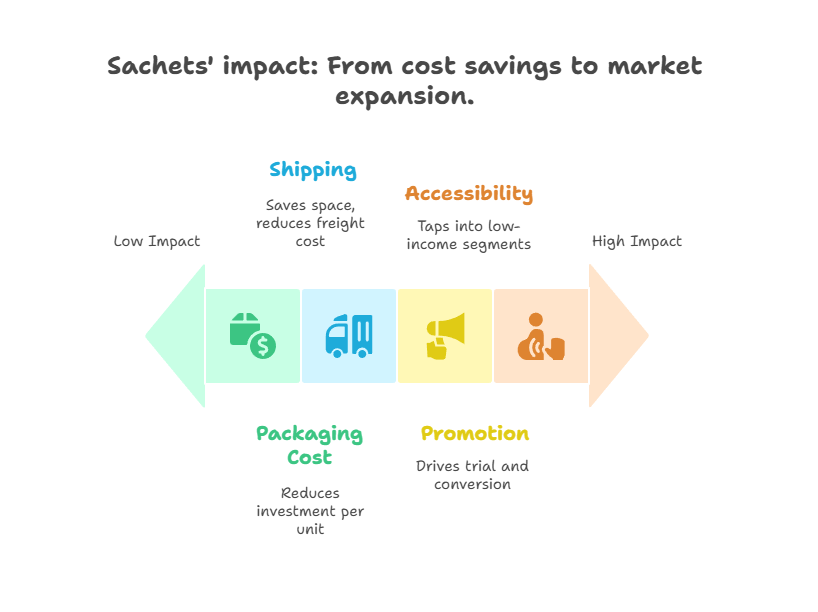
| Benefit | Impact on Business |
|---|---|
| Lower packaging cost | Reduces investment per unit |
| Easy shipping | Saves space and reduces freight cost |
| Sampling and promotion | Drives trial and conversion |
| Market accessibility | Taps into low-income consumer segments |
From what I’ve seen, sachets let brands test new markets and new products without high risk. And as a machine manufacturer, I’ve helped many clients boost sales just by switching to sachet formats.
What materials are used in sachets?
Different products need different sachet materials. The choice affects everything from shelf life to print quality.
Sachets can be made from paper, plastic films, aluminum foil, or multi-layer laminates depending on the product’s needs.
Choosing the right sachet material
You need to match the product with the right material.
| Material Type | Best For |
|---|---|
| Paper | Dry products like sugar, salt |
| Plastic | Gels, liquids like shampoo, lotion |
| Foil | Pharmaceuticals, greasy products |
| Laminated materials | High barrier protection, cosmetics |
I usually guide my clients through this choice based on the product viscosity, shelf life, and filling speed. It makes a huge difference in machine performance and product safety.
What kind of machines make sachets?
You can’t make good sachets without good machines. That’s a fact.
Sachet machines come in vertical or horizontal forms and are designed to form, fill, and seal sachets automatically.
Machine types and use cases
Your product type determines your machine type.
| Machine Type | Ideal For |
|---|---|
| Vertical Form Fill Seal | Liquids, pastes, granules |
| Horizontal Form Fill Seal | Flat sachets for powders, wipes |
| Multilane Machines | High-speed production, pharma |
As a sachet pack machine manufacturer at Hannpro, I always tell customers: don’t just chase speed or price. Match your product with the right machine. That saves time and maintenance in the long run.
Why are sachets better than bottles or jars?
There are many reasons brands switch from bottles to sachets. It’s not just about cost.
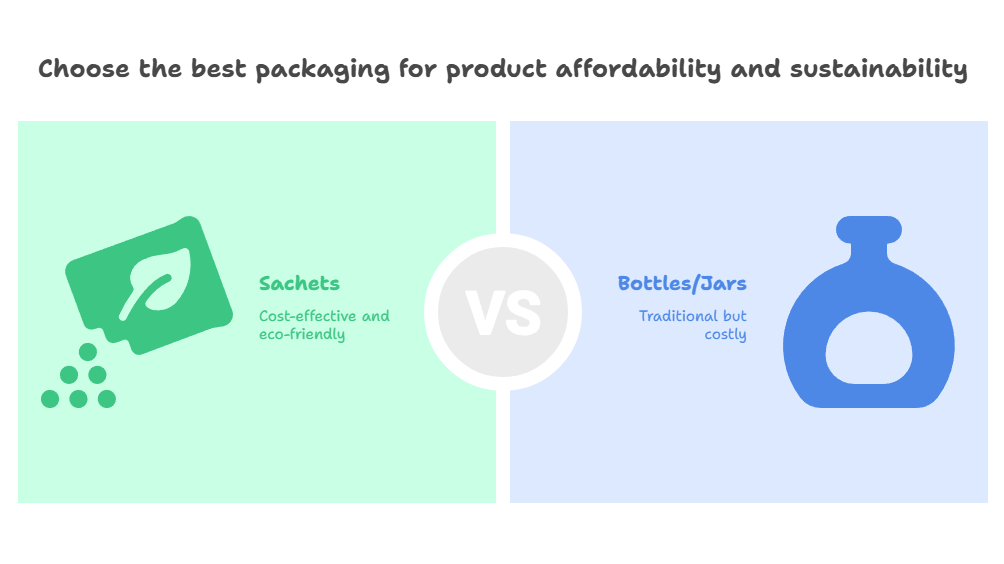
Sachets are lighter, cheaper, easier to ship, and generate less waste compared to rigid packaging.
Comparing sachets and bottles
Here’s a side-by-side look.
| Feature | Sachet | Bottle/Jar |
|---|---|---|
| Cost | Low | Higher |
| Weight | Lightweight | Heavy |
| Storage | Compact, space-saving | Bulky |
| Waste | Minimal | More plastic or glass |
For small businesses or startups, sachets make your product more affordable and flexible. I’ve seen it myself—some clients doubled sales after switching formats.
What’s the environmental impact of sachets?
You might worry about sachet waste. That’s fair. But the issue isn’t so simple.
While sachets do create plastic waste, they use less material per unit than traditional packaging and new eco-friendly materials are emerging.
Looking at sustainability
Let’s be honest. Sachets aren’t perfect—but there’s progress.
| Factor | Sachets | Bottles/Jars |
|---|---|---|
| Material Used | Minimal | More raw materials |
| Recyclability | Improving with technology | Higher, but more volume |
| Carbon Footprint | Lower transport emissions | Higher due to weight |
At Hannpro, we’re testing recyclable and biodegradable film options. It’s a small step, but it’s moving in the right direction. We also work with partners who prioritize sustainable sourcing.
Conclusion
Sachets are more than small bags—they’re powerful tools for smart packaging and smarter business.
FAQs
What is a sachet pack?
A sachet pack is a small, sealed pouch that contains a single-use quantity of a product, often used in food, cosmetics, and pharma.
What are sachets made of?
They are made from paper, plastic, foil, or laminated films depending on the product’s needs.
Why are sachets popular in developing markets?
They offer affordable, small-portion packaging that fits the buying habits of cost-sensitive consumers.
Are sachets eco-friendly?
While they create plastic waste, they use less material than bottles and eco-friendly versions are being developed.
What are vertical sachet machines?
These machines form, fill, and seal sachets vertically, ideal for liquids and powders.
Can I use sachets for solid products?
Yes, but you’ll need the right machine and material to ensure quality and safety.